Understanding Fringe Benefits vs. Guaranteed Payments for Partners
For partners in a partnership, LLC taxed as a partnership, or similar pass-through business, compensation and benefits can be more complicated than they appear. Two concepts that are often confused are fringe benefits and guaranteed payments. Although both can provide economic benefits to a partner, they are treated differently for tax purposes and serve different purposes within the partnership.
Understanding the distinction can help partners and business owners structure compensation properly, maintain accurate books, and avoid unexpected tax consequences.
What Is a Guaranteed Payment?
A guaranteed payment is generally a payment made by a partnership to a partner that is determined without regard to the partnership’s income.
In simple terms, a guaranteed payment is similar to compensation for services or the use of a partner’s capital, but the partner is receiving the payment because the partnership agreement provides for it—not simply because the partnership earned a profit.
Example: Guaranteed Payment for Services
Suppose BAC Consulting LLC has three partners. One partner, Susan, works full-time managing the company’s operations. The partnership agreement provides that Susan will receive $8,000 per month for her management services, regardless of whether the partnership has a profit for the year.
Susan receives $96,000 during the year in guaranteed payments.
The payment is generally treated as a guaranteed payment to Susan, and the partnership generally deducts the payment when determining its ordinary business income, subject to the applicable tax rules.
The important point is that Susan receives the payment regardless of whether ABC Consulting makes a profit.
Example: Guaranteed Payment for Use of Capital
Suppose John contributes $500,000 of capital to a partnership. The partnership agreement provides that John will receive an annual payment of 6% of his contributed capital, regardless of the partnership’s income.
John would receive $30,000 under the agreement.
Because the payment is determined without regard to the partnership’s income, it may qualify as a guaranteed payment for the use of capital.
What Are Fringe Benefits?
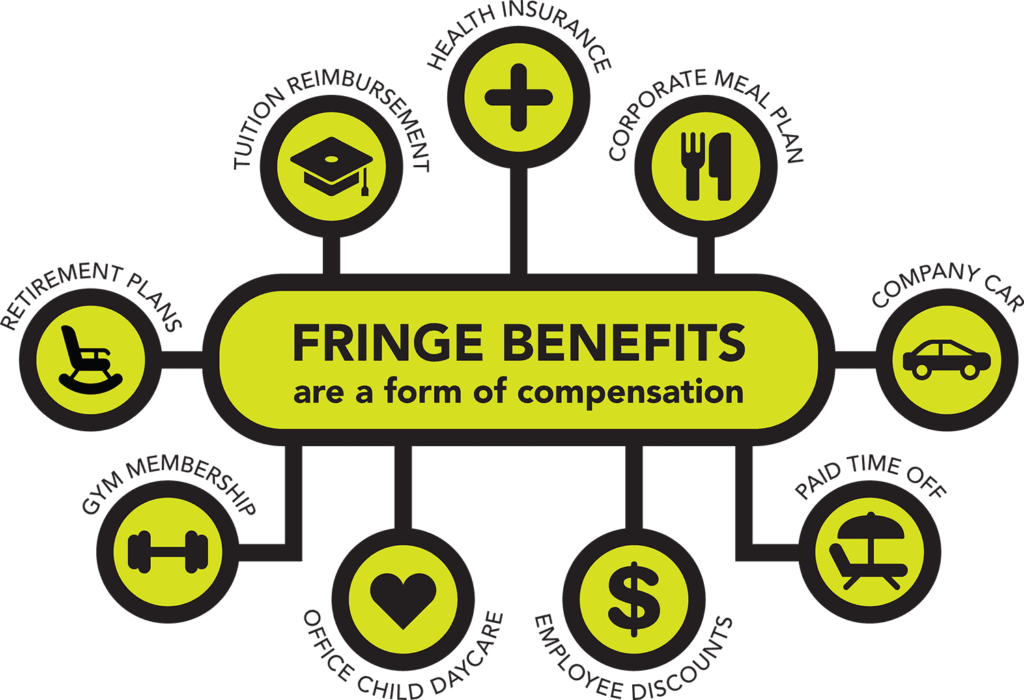
Fringe benefits are additional benefits provided by a business to an individual in connection with their services. Common examples include health insurance, retirement contributions, educational assistance, company vehicles, and certain other employee benefits.
The tax treatment becomes more complicated when the recipient is a partner.
A partner is generally treated as self-employed rather than as an employee of the partnership for federal income tax purposes. As a result, partnerships should not automatically assume that benefits provided to partners receive the same tax treatment as benefits provided to employees.
Example: Health Insurance for a Partner
Suppose ABC Partnership pays $12,000 during the year for health insurance premiums on behalf of partner Susan.
The partnership may be able to deduct the payment as a business expense, but the amount generally needs to be properly reported as part of Susan’s partnership income under the applicable rules.
Susan may then potentially qualify for the self-employed health insurance deduction, assuming she meets the requirements.
The important distinction is that the payment isn’t simply treated the same way as an employer-paid health insurance benefit for a traditional employee.
Example: Retirement Contributions
Suppose a partnership makes a $15,000 retirement plan contribution for one of its partners.
The contribution may provide a significant tax benefit, but the partnership must follow the rules governing retirement plan contributions for partners. The partner’s treatment can differ from that of an employee participating in the same plan.
Proper calculation of the partner’s earned income and the applicable retirement plan limits is important.
Fringe Benefits vs. Guaranteed Payments
The easiest way to understand the difference is to look at why the partner is receiving the benefit.
| Guaranteed Payment | Fringe Benefit |
| Payment generally determined without regard to partnership income | Additional benefit provided in connection with services |
| Often provided for a partner’s services or use of capital | May include health insurance, retirement benefits, education, or other benefits |
| Generally reported as a guaranteed payment to the partner | Tax treatment depends on the specific benefit |
| Partnership agreement often establishes the payment | May be provided under the partnership’s benefit arrangements |
| Generally included in the partner’s taxable income under the applicable rules | Some benefits may be deductible by the partnership and/or receive special tax treatment |
A Practical Example Showing the Difference
Consider a partnership with two partners, Mike and Lisa.
The partnership agreement provides Mike with:
- $60,000 guaranteed payment for managing the business.
- $10,000 of health insurance premiums paid by the partnership.
- $8,000 retirement plan contribution on Mike’s behalf.
- $20,000 share of partnership profits.
These items should not automatically be lumped together as “salary.”
The $60,000 management payment may be a guaranteed payment because it is provided for Mike’s services without regard to partnership income.
The $10,000 health insurance payment is a partner fringe benefit whose tax treatment must be determined under the applicable rules.
The $8,000 retirement contribution is another partner benefit subject to specific retirement plan rules.
The $20,000 is Mike’s distributive share of partnership profits, which is a separate concept from both guaranteed payments and fringe benefits.
This distinction is important because each item can affect the partnership’s books, the partner’s Schedule K-1, and the partner’s individual tax return differently.
Why Proper Classification Matters
Misclassifying payments to partners can create problems during tax preparation and potentially result in incorrect reporting.
For example, a partnership should not simply issue a partner a Form W-2 because the partner performs substantial work for the business. Partners generally are not employees of the partnership for federal tax purposes.
Likewise, calling every payment to a partner a “guaranteed payment” can be misleading. A partner’s share of profits, distributions, health insurance payments, retirement contributions, and other benefits may have different tax treatments.
Proper classification can affect:
- Partnership taxable income
- The partner’s Schedule K-1
- Self-employment income
- Estimated tax payments
- Deductibility of business expenses
- Retirement plan calculations
- Health insurance deductions
- The partner’s individual income tax return
- The partnership’s financial statements and bookkeeping
Common Mistakes to Avoid
1. Treating Partners Like Employees
One of the most common mistakes is putting a partner on payroll and issuing a Form W-2 simply because the partner works in the business.
Partnerships generally need to use the appropriate partnership tax rules instead.
2. Treating Every Distribution as Compensation
A cash distribution to a partner isn’t necessarily a guaranteed payment. A distribution may simply represent a withdrawal of the partner’s capital or the partner’s share of previously taxed partnership income.
3. Ignoring Partner Fringe Benefits
Health insurance, retirement contributions, and other benefits provided to partners need to be reviewed separately. The accounting entry alone does not determine the tax treatment.
4. Failing to Follow the Partnership Agreement
The partnership agreement should clearly describe how partners are compensated, how profits are allocated, and what benefits are provided.
Payments that are inconsistent with the agreement can create accounting and tax complications.
The Bottom Line
Guaranteed payments and fringe benefits are not interchangeable. A guaranteed payment is generally a payment to a partner determined without regard to partnership income, often for services or the use of capital. Fringe benefits are additional benefits provided in connection with services, and their tax treatment depends on the specific benefit and the partner’s status.
Because partnership taxation can be complex, payments and benefits should be reviewed before they are recorded as compensation or deducted as business expenses.
For partnerships and LLCs taxed as partnerships, proper bookkeeping and tax planning can make a significant difference. Working with a qualified tax professional can help ensure that partner compensation, benefits, distributions, and guaranteed payments are properly classified and reported.
Important: This article is intended for general educational purposes and should not be considered individualized tax, legal, or accounting advice. Partnership tax rules can vary depending on the partnership agreement, type of benefit, partner’s circumstances, and applicable federal and state law.